

As an Amazon Associate, I earn from qualifying purchases. This post may contain affiliate links.
If you want your child to build real skills—without worksheets or resistance—learning through play is one of the most effective approaches available.
The key is intentional play. The activities below are not just fun—they are designed to build fine motor strength, early literacy, math understanding, and problem-solving skills in a natural, engaging way.
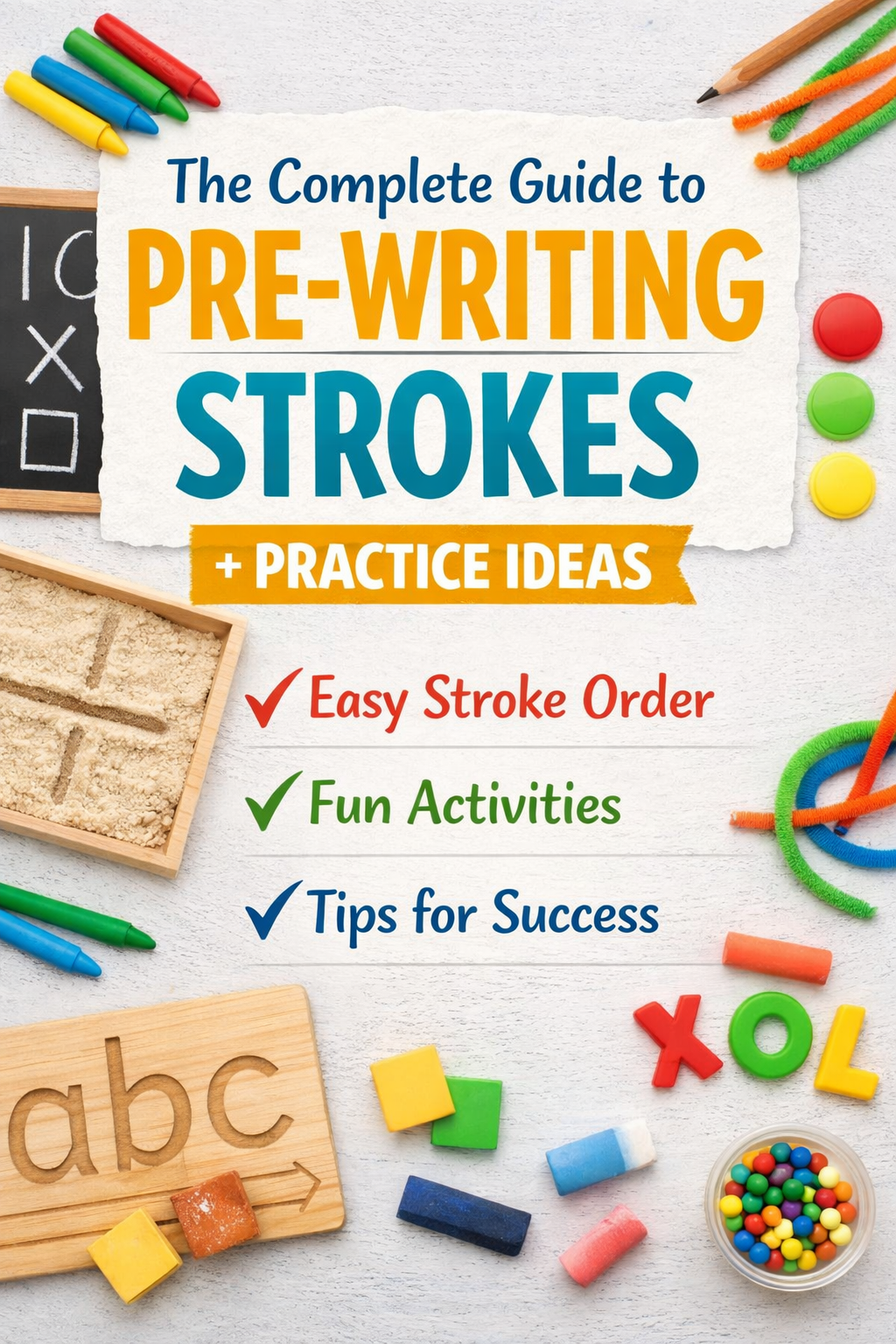
If you’re also working on writing readiness, start with The Complete Guide to Pre-Writing Strokes (With Practice Ideas) and How to Fix Pencil Grip—many of these activities directly support those foundational skills.
What Makes Play “Educational”?
High-quality play usually includes:
- Hands-on interaction
- Repetition with small variations
- Opportunities to solve problems
- Space for independence
This is what turns simple activities into powerful learning experiences.
20 Learning Through Play Activities That Build Real Skills
1. Pom Pom Transfer with Tweezers
This simple activity is one of the most effective ways to build hand strength for writing. Set out two small bowls and a handful of pom poms, and show your child how to transfer them using tweezers.
At first, they may use two hands or struggle to grip properly—and that’s exactly where the learning happens. Over time, this strengthens the same muscles used for pencil control.
Skills built: Fine motor strength, coordination, pencil grip foundation
Try a Montessori fine motor kit here (tweezers, scoops, sorting bowls)
2. Playdough Letter Formation
Instead of asking your child to write letters, have them build them. Roll playdough into “snakes” and form letters or simple shapes together.
This removes the pressure of writing while still developing the muscle memory needed later. It’s especially helpful for children who resist pencil-and-paper tasks.
Skills built: Hand strength, letter recognition, pre-writing
Supports: The Complete Guide to Pre-Writing Strokes (With Practice Ideas)
3. Building Blocks Challenge
Go beyond free play by adding simple challenges like “Can you build a bridge?” or “How tall can your tower go before it falls?”
This encourages problem-solving and experimentation. Children begin to understand balance, structure, and cause-and-effect through trial and error.
Skills built: Spatial awareness, problem-solving, creativity
We think this wooden block set is ideal.
4. Sensory Bin Exploration
Fill a bin with rice, beans, or sand, then add scoops, cups, and small hidden objects. Invite your child to dig, pour, and explore.
Sensory bins are excellent for building focus and calming busy minds. Adding a theme (like animals or letters) can extend learning even further.
Skills built: Focus, sensory processing, vocabulary
Explore a sensory bin starter kit here.
5. Sticker Line Tracing
Draw simple lines (straight, zig-zag, curved) and have your child place stickers along the path.
This builds control in a low-pressure way. Unlike pencils, stickers give immediate visual feedback and are more engaging for reluctant learners.
Skills built: Hand control, visual tracking, pre-writing
6. Sorting by Color, Size, or Type
Give your child a mix of objects and ask them to sort them into groups. Start simple (colors), then increase difficulty (size, type, or function).
This builds early math skills without formal instruction and helps children recognize patterns and relationships.
Skills built: Early math, categorization, logical thinking
7. Lacing Beads or Cards
Provide beads or lacing cards and demonstrate how to thread the string through.
This activity requires both hands to work together, which is essential for tasks like writing, cutting, and dressing.
Skills built: Bilateral coordination, concentration
Find beginner lacing bead sets here.
8. Scissor Cutting Practice
Start with straight lines and gradually introduce curves and shapes. Sit beside your child and model how to hold and guide the scissors.
Cutting strengthens the same hand muscles needed for writing and improves coordination between both hands.
Skills built: Hand strength, coordination, control
9. Magnetic Letter Play
Use magnetic letters to match, sort, or build simple words. You can start with matching letters to a reference, then move to sounding out words.
This keeps early reading playful and pressure-free while reinforcing letter recognition.
Skills built: Phonics, early reading
See our favorite magnetic letter sets.
10. Counting with Everyday Objects
Count snacks, toys, or steps during daily routines. The key is consistency—short, repeated exposure builds real understanding.
Encourage your child to touch each object as they count to reinforce one-to-one correspondence.
Skills built: Number sense, counting accuracy
11. Water Pouring Station
Set up a tray with small pitchers, cups, and funnels. Show your child how to pour from one container to another.
Spills are part of the learning process. Over time, children develop control, patience, and independence.
Skills built: Control, focus, practical life skills
Try a child-friendly pouring set here.
12. Pattern Making
Create simple patterns using blocks, beads, or everyday objects. Start with AB patterns and gradually increase complexity.
Ask your child what comes next—this builds prediction and reasoning skills.
Skills built: Sequencing, early math reasoning
13. Chalk Drawing Outdoors
Drawing on a large surface allows for bigger arm movements, which are important before refining smaller hand movements.
Encourage drawing shapes, lines, and simple letters without worrying about perfection.
Skills built: Pre-writing strokes, creativity
14. Puzzle Play
Choose puzzles that are challenging but not frustrating. Sit nearby and guide without taking over.
Puzzles teach persistence and help children learn how to approach and solve problems step-by-step.
Skills built: Problem-solving, visual perception
Shop beginner wooden puzzles here or see our favorite.
15. Pretend Play (Kitchen, Store, Doctor)
Set up simple role-play scenarios and follow your child’s lead.
This type of play builds language skills naturally as children narrate, ask questions, and act out real-world situations.
Skills built: Language development, social skills, imagination
Explore pretend play kits here.
16. Clothespin Squeeze Activity
Have your child clip clothespins onto containers or cards. You can turn it into a game by matching colors or counting clips.
This is one of the best simple activities for strengthening fingers used in pencil grip.
Skills built: Finger strength, grip control
Supports: How to Fix Pencil Grip
17. Indoor Obstacle Course
Create a simple course using pillows, chairs, and tape lines.
Give directions like “crawl under,” “step over,” or “balance here” to build both physical and listening skills.
Skills built: Coordination, balance, following directions
18. Storytelling with Picture Prompts
Show your child a few random images and ask them to create a story.
You can model first, then let them take over. This builds confidence in expressing ideas and sequencing events.
Skills built: Vocabulary, narrative skills
19. Matching Games
Use cards, toys, or household items to create matching pairs.
Start with obvious matches, then increase difficulty. This strengthens memory and attention to detail.
Skills built: Memory, visual discrimination
20. DIY Treasure Hunt
Hide objects and give simple clues like “Look under something soft.”
This encourages children to listen carefully, think critically, and stay engaged until they find the solution.
Skills built: Problem-solving, listening skills, persistence
How to Make These Activities More Effective
- Keep sessions short (10–20 minutes)
- Repeat activities often (this is where real learning happens)
- Follow your child’s interests
- Allow small struggles before stepping in
Final Thoughts
When play is intentional, it becomes one of the most powerful teaching tools you have. These activities build real skills while keeping learning enjoyable and low-pressure.
For even stronger results, combine these with How to Fix Pencil Grip and The Complete Guide to Pre-Writing Strokes (With Practice Ideas) to support writing readiness naturally.