

As an Amazon Associate, I earn from qualifying purchases. This post may contain affiliate links.
Most parents don’t realize this until it becomes a problem: if a child struggles with writing, the issue often starts long before a pencil is ever introduced.
Fine motor skills—like gripping, pinching, and controlling small movements—form the foundation for writing, cutting, and everyday independence. Without enough strength and coordination in the hands, even simple tasks can feel frustrating.
The right toys can help build these skills—but only if they require intentional movement and repetition.
In this guide, you’ll find fine motor toys for kids that support real development, not just busy work. These are practical, effective tools that help build hand strength, coordination, and control through play.
If you want to combine toys with hands-on practice, you can also start here:
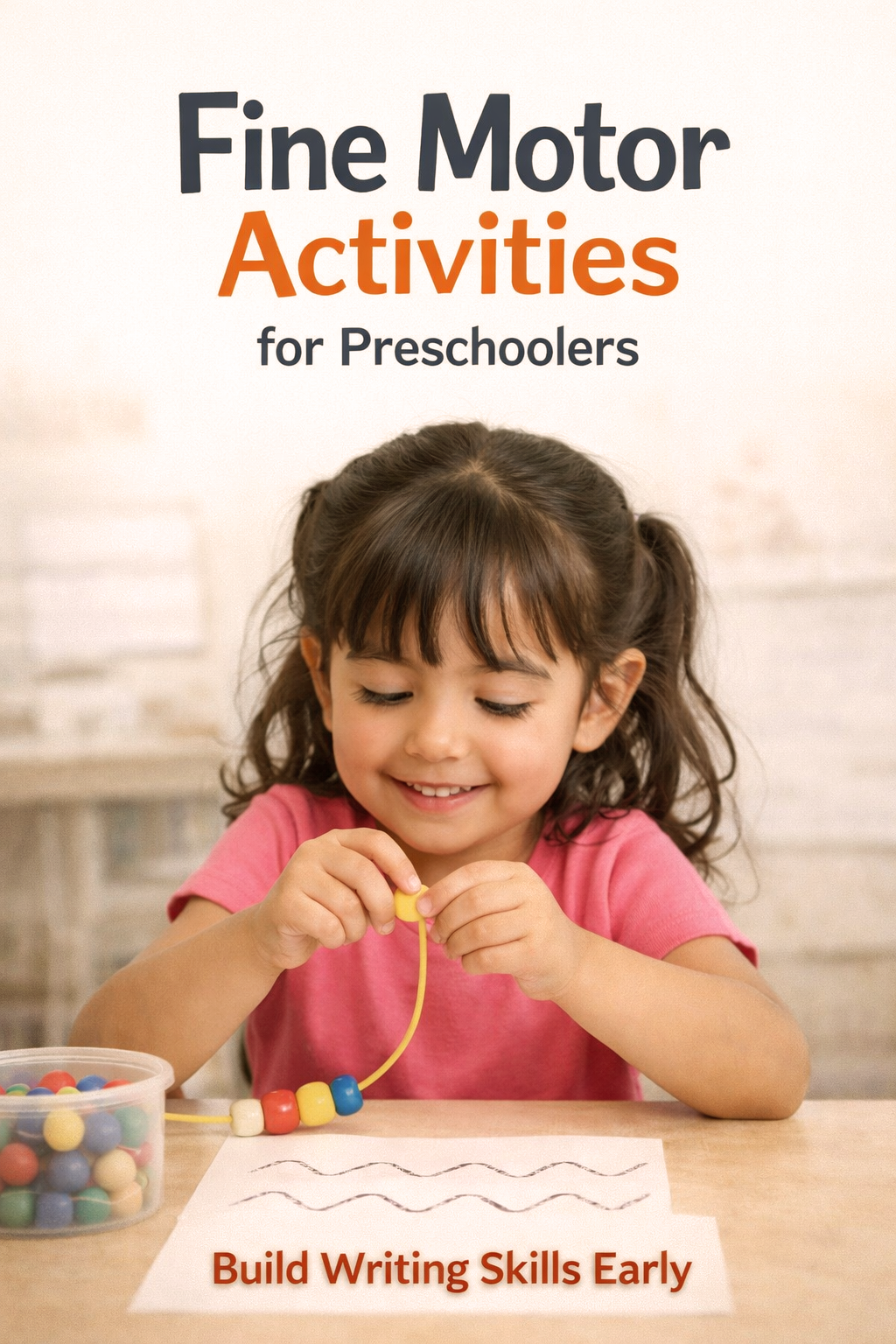
Fine Motor Activities for Preschoolers.
Best Fine Motor Toys (Quick Picks)
If you want a simple place to start, these are consistently effective and widely used to support fine motor development:
- Best overall: Melissa & Doug Deluxe Wooden Lacing Beads
- Best for hand strength: Play-Doh Kitchen Creations Tool Set
- Best for pre-writing skills: Learning Resources Fine Motor Tool Set
These types of tools are commonly used in early childhood classrooms before formal writing begins, because they target the exact movements children need to develop first.
Why Fine Motor Toys Matter for Early Development
Fine motor development is closely tied to a child’s ability to perform both academic and everyday tasks. Research in early childhood development shows that hand strength and coordination are directly linked to writing readiness and independence skills (Cameron et al., 2012).
When children regularly use fine motor development toys that require controlled movement, they gradually build:
- Stronger finger muscles
- Better hand-eye coordination
- Improved precision and control
This is why the type of play matters. Toys that encourage passive interaction don’t produce the same results as those that require effort and repetition.
For a broader approach to learning through play, explore:
Learning Through Play
Best Fine Motor Toys for Kids (That Actually Help)
Not all toys labeled “educational” are effective. The following options are chosen because they actively strengthen the muscles and coordination children need for writing and daily tasks.
Lacing Beads (Coordination and Control)
Lacing beads are one of the most effective preschool fine motor toys because they require both hands to work together in a controlled way. This strengthens coordination and builds the ability to guide movement with precision.
Good option to consider:
Melissa & Doug Deluxe Wooden Lacing Beads
Peg Boards (Early Precision)
Peg boards are ideal for beginners. They allow children to practice picking up and placing objects, helping develop the pincer grasp used later for holding a pencil.
Good option to consider:
Learning Resources Jumbo Peg Board Set
Tweezers and Sorting Tools (Pre-Writing Strength)
Tweezers are one of the most effective toys for hand strength because they mimic the grip used for writing. They strengthen small hand muscles while improving control and focus.
Good option to consider:
Learning Resources Fine Motor Tool Set
If your child is working toward writing skills, this is the next step:
Pre-Writing Activities for Preschoolers
Building Toys with Smaller Pieces (Controlled Placement)
Smaller building toys require more precision and controlled pressure, helping children refine coordination and develop steady hand movements.
Good option to consider:
LEGO Classic Medium Creative Brick Box
Play Dough and Tools (Hand Strength)
Play dough is one of the simplest and most effective tools for building strength. The resistance created by squeezing and shaping helps develop the muscles needed for writing.
Good option to consider:
Play-Doh Kitchen Creations Tool Set
Screw and Bolt Toys (Wrist Development)
Twisting and turning motions help strengthen the wrist, which plays a critical role in stabilizing the hand during writing tasks.
Good option to consider:
Learning Resources Design & Drill Bolt Buddies
Sticker Activities (Pincer Grasp Practice)
Peeling and placing stickers helps children refine precise finger movements while strengthening coordination.
Good option to consider:
Melissa & Doug Reusable Sticker Pad
Threading Cards (Focused Coordination)
Threading cards provide structured practice that builds both coordination and persistence, supporting long-term skill development.
Good option to consider:
Melissa and Doug Lacing Cards
Which Fine Motor Toy Should You Start With?
If your child is just beginning, start with peg boards or sticker activities to build confidence.
If hand strength is the main concern, play dough and tweezers are the most effective.
If coordination needs improvement, lacing beads and threading activities provide the best results.
You can also reinforce these skills through simple daily routines:
Preschool Learning Binder Activities
How to Get the Most Out of These Toys
The toy itself matters—but consistency matters more.
Short, regular sessions are far more effective than long, occasional ones. Even a few minutes a day can lead to noticeable improvements over time.
Children benefit most when they are allowed to work through challenges independently. Struggle is part of the process and helps build control and confidence.
These types of activities are often recommended before introducing formal writing because they prepare the hands for more complex tasks.
How Fine Motor Skills Connect to Writing
Fine motor development directly affects how easily a child learns to write.
Without sufficient strength and control, children may:
- Tire quickly
- Struggle with letter formation
- Avoid writing tasks altogether
Building these skills early creates a smoother transition into structured learning.
To understand how these skills develop step by step:
The Skills Kids Need Before Writing
Final Thoughts
The most effective fine motor toys are not the most complex—they are the ones that require effort, repetition, and control.
When used consistently, they help children build the foundation needed for writing, independence, and confidence.
If you want to go beyond toys and support development through everyday activities:
Fine Motor Activities for Preschoolers